

WELCOME TO ABSWELLBEING!
This blog has been created with the hope and intention to educate others on anorexia nervosa, an illness with the highest mortality rate in children and is misunderstood by so many. I aim to reach parents of a child suffering from an eating disorder, those who are struggling so they can better understand their illness and how it might function for them, as well as individuals who feel they are ignorant to mental health and the prominence it has on society that has become so fixated on physical appearance and food intake.

ABOUT THIS BLOG
I have struggled with anorexia nervosa for around three years and always experienced negative body image and anorexic cognitions which has clouded and dampened my life and the way in which I've been able to live it. I personally have felt distant and detached from society due to my illness, and have been utterly surprised by the lack of understanding have on anorexia nervosa and the perpetuation of social media stereotypes have had on the views of society. Stereotypes which prevent mental and physical recovery. I myself have struggles, so does everyone else, but instead of being defined by a label of "anorexia", I see a much more positive and productive way to use my insight and experiences to inform others and help mould the modern world into one that's aware of eating disorders and how to confront the illness, not exclude it. I will share primarily educational posts around topics which define anorexia nervosa as well as tips and tricks that will only be known from those who have struggled.

What is an eating disorder?
Eating disorders. A topic of mental health which holds such damaging stereotypes and misconceptions. Anorexia, a phrase which can silence a room and leave occupants feeling cold and confused. When will we face up to the illness which leaves all sufferers miserable, alienated, and misunderstood in a society which fixates on diet, appearance, and ignores the mixed and damaging signals to the public.
"Just eat"
"It’s all about being thin."
"It’s so vain and pathetic."
All phrases leaving those who suffer alone, afraid to seek support and treatment, and above all, dismissed and invalidated. Anorexia nervosa holds the biggest mortality rate after suicide amongst mental illness and kills more people than cancer. Let that sink in for a moment. Do you still think that’s it’s a problem that we can ignore? Or is it finally time to admit and acknowledge that what once was a dismissible problem, has now become a chaotic cry for help.
Many individuals are unaware of the presence that eating disorders have in society. They leave a devastating impact on both the individual who suffers, as well as those who surround them. They affect everyone. One thing which we must all understand and acknowledge is that eating disorders are serious and life-threatening mental illness which have both physical and psychological complications, both reversible and irreversible. They do not discriminate and can affect people of all ages, genders, ethnicities, and socioeconomic backgrounds, all with different body shapes, weights, and sizes. An illness which thoughts can completely alter and define an individual’s life. Holding such control and power over those who it prays on, leaving everyone surrounding it feeling vulnerable, weak, and worthless. It is time that people knew the truth about an eating disorder. It is not to be glamourised. It is not to be portrayed and projected as a positive entity enhancing a life and creating a desirable body through unhealthy methods. It is far from this.
As one such individual who has been affected by anorexia nervosa, I say- that enough is enough. It is time everybody knew what an eating disorder is really like. It is time that we banished the stereotypes glamourising such a deadly illness. It is time that everybody knows the truth, becomes well informed and educated surrounding the matter, and held more knowledge to help encourage change in a world where appearance comprises an identity.
This book aims to provide the correct knowledge and information to educate others on eating disorders, with a focus on anorexia nervosa, and provides interactive questions and resources which address every area of life affected by an eating disorder. Including some resources and helpful notes for individuals caring for and supporting a loved one struggling with an eating disorder, primarily acting as a work booklet for an individual whose struggling- to help provide insight and understanding for their illness, and ways to cope, manage, and challenge the eating disorders.
We have the power to own our stories and change the world which we live in. No longer shall people suffer in silence. - this is an eating disorder, unfiltered. The good, the bad, and the ugly.
Anorexia nervosa education and awareness!
This blog is to educate others on anorexia. My primary aim as someone who suffers from anorexia nervosa is to try and use my insight to help and educate others. I have seen first hand the effects the illness can have primarily on the individual, as well as the secondary impacts on loved ones. I aim to use this platform to share the truth about eating disorders, in particular anorexia and anorexia nervosa and bridge the gap between society and mental health.
What is anorexia nervosa?
Anorexia nervosa is a complex mental illness which can be dealt. It is a complex psychological, disorder which involves self starvation to lose weight and exist at an abnormally low body weight. The individual will most commonly have body dysmorphia which will prevent them seeing their underweight body, and they will see it to be bigger than it actually is which can pose as a barrier to recovery. It requires prompt medical attention in most cases. It is characterised by the intense fear of gaining weight which often leads to severe weight loss and compromised mental and physical health. It can also enforce harmful behaviours in a bid to decrease weight. The treatment of anorexia often refers to three main principles, stabilising weight, starting nutritional rehabilitation and treating emotional issues which underpin the disorder and maintain it.

My DEPOP shop!
My beautiful handmade bracelets are made from pastel clay beads. All my bracelets come in size XS, S, M, L, XL, XXL (just drop me a message to custom and get a guide as to what size you need!) they’re clay beads and comfortable on the wrist :) All bracelets are packaged in an organza bag, come with a motivational card, thank you card, beautiful pink packaging, and a thank you sticker + personalised note. The items can be custom made to say whatever, and more items will be made to suit all sizes! They’re perfect as gifts and as reminders for yourself! Enjoy! :)


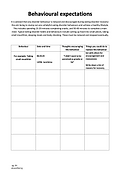


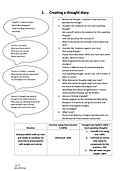


I have created this word document to share some easy and quick meals and snack ideas for those individuals who need some inspiration for mealtimes in eating disorder recovery. Having received medical guidance and baseline meal plans for basic nutritional needs at different points in recovery, I have shared this knowledge and given a baseline bare minimum portion for one individual. This means that any less than this portion is unacceptable and too “little” for anybody. Therefore, all recipes are to serve “1” person, it can be easily amended and changed where needed and could be a perfect opportunity for you to start cooking a meal for yourself, and for others. This is similarly a commonly used occupational therapy activity to encourage young people to take control over meal preparation and encourage appropriate serving sizes and exposure to food. Within this work booklet, I have included recipes for meals as well as instructions which you can refer to. Additionally, I have included the nutritional benefits of the items mentioned in this booklet as well as ways in which these items can be incorporated into food. This could provide a way to challenge eating disorder cognitions as your well informed about how these foods are going to help you get back control, and in turn, a life without an eating disorder. Therefore, the portion support acts as a baseline of what’s considered a good portion to start off at in eating disorder recovery: this will vary for everybody. Alongside this, I have included a few meals plans which I have come across in my eating disorder treatments in hopes it will capture what’s deemed “enough” for those in eating disorder recovery- explaining nutritional needs at many stages of recovery. These examples show how much nutrition is needed even when just re-establishing eating patterns. Have a go at creating your own meal plan to help take power and control away from your eating disorder and hand it over to you and what you and your body needs. Of course- this will be very different for everybody due to factors such as basal metabolic rates. I have also included a few helpful tips and tricks surrounding mealtimes, as well as CBT style approaches to assist feelings and thoughts surrounding mealtimes! Take from this what you wish- you can do this!


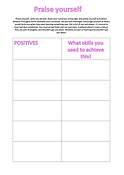
Often, those struggling with an eating disorder are prone to suffer from anxiety, and period of high-level distress, often because of an eating disorder behaviour, or thought. It is crucial- that everyone can deal with and expect to face periods of anxiety in our day to day lives. Anxiety and stress are something that everybody struggles with and experiences as part of life. This is normal and beneficial when we are in a stressful situation. Sometimes, feelings of restlessness or anxiety, become unmanageable where excessive worry will take over one’s ability to function and access normal life. This may affect relationships, self-esteem, and control behaviour. It has been proven by research, that about half of individuals with eating disorders also have an anxiety disorder and most of the time, the anxiety diagnosis has stemmed from the eating disorder. Therefore, it is important to control and address anxiety- to cope in eating disorder recovery, and not be consumed by racing thoughts. Recognising and treating co-occurring anxiety is important while in treatment for an eating disorder.
Often, the two can be very closest connected. On the one hand it is understandable that an eating disorder can lead to anxiety surrounding weight, self-image, and other social pressures. But it may be relating to many other factors which are being masked by the eating disorder. The feelings created by anxiety may be loss of control, thus, leading an individual to lean more to their eating disorder to feel control over their life’s. Therefore, as an eating disorder is a coping mechanism, they will help individuals cope with periods of anxiety such as work pressures or educational worries. All used to help numb uncomfortable feelings. While the individual may feel they are regaining a sense of control and reducing the levels of anxiety that they feel, they may be causing nutritional damage, and in turn, it’s been proven that starvation causes anxiety and low mood. So, it has the reverse effect to what it was intended to do. Anxious thoughts can often show themselves as body sensations, which is our bodies alarm system to warn us of some danger in the environment we are in. Therefore, it’s our bodies evolved reaction to protect us from things that could threaten our survival. However- this means that our body and brain are making us perceive something as a threat, when, it poses little danger to us. Therefore, the anxious thoughts, both created by an eating disorder, as well as more generic worries, will all impact on an individual’s ability to cope and manage their emotions.
Therefore, I have created this booklet on anxiety- to share some information on anxiety, how it can be recognised and dealt with, as well as some interactive resources to help in stressful situations. This is just a little pack as a baseline for coping when anxious thoughts arise. Of course- find what is going to be most helpful and productive for you! You’ve got this- keep fighting!

MY AIMS
I am an 18 year old student from the UK who has suffered from anorexia nervosa for the past 3 years. It's not till I began to struggle, I've become aware of the stigma and stereotypes surrounding eating disorders, particularly anorexia nervosa. I have created an instagram account to primarily educate others on anorexia and share the truth about an illness that causes individuals feel alienated in a society that promotes a certain body type and neglects mental health support and wellbeing.
MY POSTS
On this platform, I will be sharing both educational posts which surround eating disorders, as well as my opinions on certain topics regarding treatment. Consequently, I would love to have the opportunity to provide support for others experiencing the illness, as well as providing some insight for individuals who are watching their loved one suffer from the debilitating illness and would love to gain a better insight as to what they can do to help.
WHY?
As someone who has experienced a range of treatment methods both at home and away from home, I aim to use social media to help educate others on an illness which affects far too many people of all backgrounds. It's not until I myself have suffered, I've noticed what society lacks in terms of education on eating disorders and the damaging stereotypes which can prevent individuals from seeking help. Take what you wish from this website, I hope it provides you with the knowledge to apply to situations where you're met by an individual with an eating disorder.


